- WhatsApp: +8615800837670
- EMAIL: info@kacexpo.com
A New Track in China-Georgia Trade: A Cross-Border “Barter” Market Driven by Chicken Breast.

When people think of Georgia, images often come to mind: the glittering night views of Tbilisi, the snow-capped peaks of the Caucasus, the affordable yet delightful wines, and the bay leaves that season 99% of Chinese kitchens.
But few know that when it comes to “eating chicken,” China and Georgia have mastered the art of cross-border complementarity—each supplying what the other needs.
Recently, the two countries signed a cooperation agreement. In plain terms: China helps feed Georgia’s “pecs,” while Georgia satisfies China’s “chicken feet freedom.”
How Chinese Chicken Became a “Lifesaver” for Georgia’s Fitness Enthusiasts

Georgians love meat, but local poultry production falls far short of demand. The numbers tell a clear story: locally produced poultry meets less than 30% of domestic needs, leaving 70% to be imported.
And when it comes to import sources, China is the undisputed “champion.”
In the first ten months of 2025 alone, Georgia imported over 20,000 tons of chicken from China, worth more than $34 million. What’s more interesting? Nearly all of it was frozen chicken breast.
Why chicken breast? Georgians have a strong preference for it: firm texture, boneless, high in protein—perfect for local dietary habits and a staple for fitness enthusiasts. Back in China, aside from the fitness crowd, most people aren’t particularly fond of dry-textured chicken breast.
One side has a surplus, the other has a pressing need—a perfect match.
In Tbilisi’s supermarket freezers, major local importers like West Invest, Izi, and Kakso mostly sell chicken breast from China. So, the protein many Georgians consume after their workouts likely traveled all the way from China.
Georgian Chicken Feet: A Burden Locally, a Treasure in China
If chicken breast is China’s “export advantage,” then chicken feet are Georgia’s “unexpected windfall.”
In Georgian cuisine, chicken feet, necks, and heads are considered “hard to eat, hard to handle” leftovers. For local farms, they were once a headache: you couldn’t just throw them away, but they served no purpose and cost money to dispose of.
But once they arrive in China, they transform into gold:
- Chicken feet→ pickled, braised, or crispy fried — the ultimate late-night snack
- Chicken necks & heads→ spicy, braised, or grilled — national favorites
What locals see as waste, the Chinese see as premium ingredients.
According to local industry estimates, Georgia collects around 120–150 tons of chicken feet and necks annually. The volume isn’t huge, but by exporting to China, what used to be waste now generates real revenue.
03 What Else Does Georgia Import from China?
China-Georgia trade complementarity goes far beyond “chicken breast for feet.” In 2025, China’s exports to Georgia reached $2.39 billion, a year-on-year increase of 20.7%. China has been Georgia’s largest import source for many consecutive years.
Main imports from China include:
Machinery & Electronics
- Computers and accessories
- Communication equipment, TVs and parts
- Engineering machinery and industrial equipment
Transportation Equipment & Parts
- Automobiles and components
- Tires (over $22 million in imports)
️ Building Materials & Metal Products
- Steel and metal products
- Construction and decoration materials
- Non-alloy steel flat-rolled products
Household & Consumer Goods
- Lighting equipment
- Furniture and home appliances
- Textiles, garments, footwear
- Daily necessities
Emerging Sectors (Fastest Growing)
- New energy equipment (solar, energy storage)
- Digital economy products
- AI-related equipment
Food & Agricultural Products (Bidirectional)
- China exports tea, spices, processed foods to Georgia
- Georgia exports wine, honey, mineral water to China
04 What Georgia Sends to China: More Than Feet and Wine
Georgia also exports a range of specialty products to China. In 2025, Georgia’s exports to China reached $310 million, up 11.1% year-on-year.
Main exports include:
- Wine – Georgia, the birthplace of wine, is gaining popularity in the Chinese market
- Honey – A bilateral agreement has been signed for honey exports
- Nuts and dried fruits
- Mineral water
- Copper ores and concentrates
Institutional Backing: How the Free Trade Agreement Accelerates China-Georgia Trade
The economic ties between China and Georgia are supported by strong institutional frameworks:
- 2018:The China-Georgia Free Trade Agreement took effect, making China Georgia’s first FTA partner in Eurasia, covering 95% of Georgian exports
- 2025:Both sides completed FTA upgrade negotiations to reduce non-tariff barriers, streamline inspection and quarantine procedures, and promote e-commerce cooperation
- 2025:Honey and poultry export agreements were signed, opening doors for more Georgian products to enter the Chinese market
The trade structure between the two countries continues to optimize, expanding from traditional infrastructure to new energy, high technology, agricultural products, and beyond.
Beyond Food: Where Else Does China-Georgia Trade Complement?
This cross-border “chicken-for-feet” cooperation is essentially a story of precise complementarity in lifestyles. No one compromises; no one feels shortchanged. Each side supplies what the other needs—a true win-win.
And this complementarity is precisely a microcosm of China-Georgia economic ties.
From chicken breast to wine, from machinery to new energy, trade between the two countries continues to heat up. In 2025, bilateral trade volume reached $2.7 billion, up 19.5% year-on-year. As a key node along the Belt and Road, Georgia is becoming a golden gateway for Chinese companies to enter the Caucasus and Eastern European markets.
Exhibition Empowerment: Direct Access to Georgia – Seize Opportunities in the Caucasus
As a professional exhibition organizer deeply rooted in the Belt and Road markets, Kaichen International Exhibition offers you an excellent platform to connect directly with Georgia and the Caucasus region:
The 8th Smart Life Expo Georgia
September 26-28, 2026
Tbilisi International Exhibition Center
Why Exhibit?
- Precise Matchmaking: Direct access to importers and distributors from Georgia and neighboring countries
- Market Insights: Deep understanding of consumer demand and purchasing habits in the Caucasus region
- Brand Expansion: Seize Georgia’s strategic position as a Eurasian gateway
Bridging the Distance: Putting the Best on Each Other’s Tables
Someday, as you nibble on braised chicken feet at home, that very chicken might have basked in the sun beneath the Caucasus mountains and breathed the evening breeze of Tbilisi.
If you ever travel to Georgia and pick up a pack of chicken breast at a supermarket, chances are it came “from home.”
And in China, stewing Georgian chicken feet with Georgian bay leaves might just be the perfect pairing.
Crossing mountains and seas, putting the flavors each side loves best on the other’s table—that’s the truest, most satisfying kind of win-win.

When people mention Georgia, wine, snow-capped mountains, or its key role in the Belt and Road Initiative often come to mind. Yet on the map of the global apparel supply chain, this small Caucasus country is emerging as a high-profile “sewing machine”, thanks to its unique policy advantages and strategic location.
From Nike and Adidas to Zara, “Made in Georgia” is appearing more and more often on the labels of these familiar international brands. Today, we go beyond Georgia’s manufacturing cost advantages to explore a core question: does it only handle cutting, making and trimming, or can it also weave and produce fabrics? And where are the opportunities for Chinese fabric suppliers?
Why Georgia? It’s Not Just About Low Costs

Located in the Caucasus region of Eurasia, at the crossroads of Western Asia and Eastern Europe, Georgia borders the Black Sea to the west and boasts an extremely important strategic position. Its capital Tbilisi serves as a regional transport hub. With this geographic advantage, Georgia has become a natural bridge connecting Europe and Asia.
More importantly, it offers a first-class business environment:
- Extensive Free Trade Agreement (FTA) network: Georgia has signed the Deep and Comprehensive Free Trade Area (DCFTA) with the EU, as well as FTAs with Türkiye, China (including Hong Kong), Ukraine, the European Free Trade Association (EFTA) and CIS countries. It also benefits from Generalized System of Preferences (GSP) treatment from the United States, Canada, Japan and other countries. This means products manufactured in Georgia can enter a huge market of around 900 million people duty-free or at preferential tariff rates.
- Favorable tax policies: Georgia applies a transparent, low-tax system, taxing only distributed profits while exempting retained and reinvested profits. Export-oriented manufacturers in free industrial zones (FIZs) in Poti, Kutaisi and Tbilisi enjoy exemptions from almost all taxes except personal income tax.
- Low utility costs: Industrial electricity costs as low as approximately 6 US cents per kWh, with 80% coming from hydropower – clean and affordable.
- Young, skilled and cost-competitive labor force: The average monthly manufacturing wage is around US$370 (as of 2018), labor laws are flexible, and the government supports vocational education and customized training. In addition, Georgia’s banking services are convenient and efficient, with widespread online and mobile banking, greatly facilitating cross-border remote management.
These advantages have attracted numerous international brands to set up production facilities here, including Marks & Spencer, Moncler, Nike, Adidas, Zara, Puma, H&M, Tommy Hilfiger, Koton and Next.
A Hidden Weakness: It Makes Clothes, But Hardly Woven Fabrics
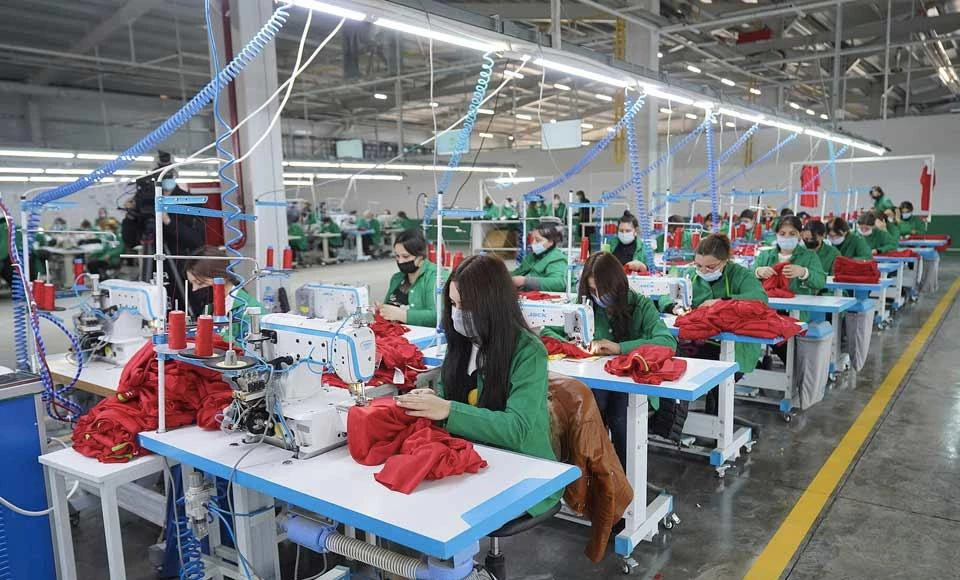
Behind the impressive contract manufacturing figures, however, Georgia’s textile industry has an Achilles’ heel: it produces almost no fabrics domestically.
Although Georgia has a long manufacturing tradition dating back to the 1960s and 1970s, its modern textile industry chain suffers from a clear structural gap. Industry data shows that Georgia has virtually no large-scale local textile production capacity. Even its so-called “sustainable fashion” brands rely heavily on imported raw materials.
This creates a distinctive scenario: Georgia’s factories hum with activity, with workers proficiently performing cutting, manufacturing and trimming (CMT) operations, yet nearly all the fabrics they process come from abroad.
The Fabric Supply Lifeline: Türkiye First, China Second
If Georgia does not produce its own fabrics, where do they come from? The answer is imports, highly concentrated in just a few sources.
For key raw materials such as cotton, Georgia’s import structure is clearly defined:
- Türkiye (over 65%): Thanks to its geographic proximity and free trade agreements, Türkiye is the “main artery” feeding Georgia’s textile industry.
- China (around 18%): As a global textile powerhouse, China plays an indispensable role in supplying fabrics to Georgia. Especially in recent years, with the advancement of the Middle Corridor initiative, logistics channels for Chinese fabrics to reach Georgia have become smoother.
Notably, major manufacturers such as Ajara Textile, which produces for Nike and Adidas, depend heavily on imported raw materials. To meet the EU’s rules of origin for diagonal cumulation, some raw materials must even come from Türkiye or Georgia itself, further deepening ties with Türkiye.
China’s Opportunities: More Than Fabric Sales, but Industrial Chain Complementation

For Chinese textile enterprises, Georgia’s fabric gap represents enormous potential.
First, direct fabric trade.
2023 data shows that China has become the leading supplier of certain knitted fabric categories to Georgia, even surpassing Türkiye. From functional chemical fiber fabrics to knitted cloth, Chinese companies can fully leverage Georgia’s tariff advantages by exporting fabrics to the country for garment processing, with finished products then sold to the EU duty-free.
Second, upgrading industrial capacity cooperation.
Georgia not only needs fabrics but also lacks high-value-added sectors such as printing, dyeing and finishing. International trade fairs held in Tbilisi, which bring together fabric suppliers from Türkiye, China, the UAE and elsewhere, reflect strong local demand from designers and manufacturers for high-quality textiles.
Connecting with China: Where Is Our Fabric Backbone?
For businesses looking to engage in apparel contract manufacturing or invest in fabric plants in Georgia, which industrial clusters in China can provide strong support?
China has the world’s most complete textile industry clusters. Given Georgia’s focus on manufacturing sportswear, fast fashion (Zara) and high-performance outerwear (Moncler), the following regions are particularly noteworthy:
- Shishi & Jinjiang, Fujian (casual and sportswear): Shishi is a hub for casual apparel, while Jinjiang is a core production base for raw and auxiliary materials for sports shoes and apparel. It is the main supply base for brands like Nike and Adidas, offering mature sportswear fabrics and accessories.
- Haining & Zhuji, Zhejiang (warp knitting & chemical fibers): Haining excels in warp-knitted composite materials, and Zhuji in intelligent embroidery machinery, providing technical advantages for functional garments and specially processed fabrics.
- Hanchuan, Hubei (sewing threads): Auxiliary materials should not be overlooked. Hanchuan produces two-thirds of China’s sewing threads, a key component determining finished garment quality.
- Wujiang, Jiangsu (imitation silk & chemical fibers): A major center for imitation silk fiber materials, Wujiang boasts strong R&D and production capabilities for fast-fashion women’s wear fabrics.
- Changzhou, Jiangsu (specialty fabrics & dyeing): One of the birthplaces of modern China’s textile industry, Changzhou has formed a full industrial chain covering spinning, weaving, dyeing and finishing, apparel and textile machinery manufacturing. Its specialty products include yarn-dyed fabrics, corduroy and denim, supported by industrial clusters such as Hutang, known as a “Famous Textile Town of China”.
Conclusion
Georgia’s apparel manufacturing sector is like a high-performance sewing machine – yet it lacks the “fabric” – the domestic textile production that feeds the machine.. For Chinese companies, Georgia represents both a promising market for high-end fabric exports and a strategic gateway to avoid trade barriers and access the European market.
When “Chinese fabrics” meet “Georgian manufacturing”, with onward access to the EU market, a brand-new “golden corridor” in the supply chain is quietly taking shape.

2026 Smart Life Expo Georgia
Dates: September 26–28, 2026
Venue: Tbilisi
Frequency: Annual
Against the backdrop of drastic upheavals in the global geopolitical landscape and ongoing conflicts in some regions, the international community’s attention is often fixed on tensions in hotspots. Yet pragmatic cooperation between China and countries worldwide—especially key nations like Georgia at the crossroads of Eurasia—has continued to advance steadily, demonstrating remarkable resilience and vitality. Recently, Zhou Qian, Chinese Ambassador to Georgia, gave a written interview to the Georgian news website Business Insider Georgia, systematically elaborating on the fruitful achievements of China-Georgia economic relations in 2025 and offering in-depth prospects for future cooperation. His remarks paint a clear picture of deepening bilateral ties and expanding cooperation.

Economic and Trade Relations: From Milestones to New Heights
In 2025, under the strategic guidance of the leaders of both countries, China-Georgia economic and trade relations entered a “fast lane” of development. Ambassador Zhou described the year as “fruitful, with multiple breakthroughs”—breakthroughs embodied not in abstract concepts, but in a series of concrete, far-reaching milestones.

1. Political Mutual Trust and High-Level Exchanges Drive Economic Cooperation
Georgia served as the Guest of Honor for the first time at the 8th China International Import Expo (CIIE). Prime Minister Irakli Kobakhidze led a large business delegation to attend and held a meeting with Chinese Premier Li Qiang. This move not only showcased Georgia’s national image and premium products to the world’s largest market but also enhanced political mutual trust through direct high-level dialogue, laying a solid foundation for subsequent pragmatic cooperation.
2. Historic Upgrade of Institutional Arrangements
The China-Georgia Free Trade Agreement (FTA)—the first FTA initiated and concluded by China after the launch of the Belt and Road Initiative—completed its upgrade negotiations in 2025中华人民共和国商务部. This is a landmark development, signaling that amid rising deglobalization, China and Georgia remain firmly committed to advancing trade and investment liberalization and facilitation. The upgraded agreement will further reduce trade barriers, expand market access, and provide robust institutional guarantees for sustained growth in bilateral trade.

3. Record-Breaking Trade Volume and Upgraded Cooperation in High-Value-Added Sectors
From January to November 2025, China-Georgia trade volume reached $2.44 billion, a year-on-year increase of 20% and an all-time high. More notably, bilateral cooperation has expanded from traditional infrastructure to technologically sophisticated complete sets of equipment and high-tech sectors. Chinese enterprises such as Goldwind participated in wind power projects in Gori, Georgia, and CRRC Group took part in the modernization of Tbilisi metro carriages—projects marking a shift from “quantitative accumulation” to “qualitative leap” in China-Georgia cooperation.
Focus Areas: Clean Energy, Infrastructure, and the Digital Economy
Looking ahead, Ambassador Zhou repeatedly emphasized the vast potential of China-Georgia cooperation and identified several key growth areas that align with Georgia’s national development strategy and China’s high-quality development goals.
1. Deep Cooperation in Clean Energy
Georgia boasts abundant hydropower, wind, and solar resources, but its development level and energy efficiency remain to be improved. China leads the world in clean energy technology, has a complete industrial chain, and rich project experience. Ambassador Zhou specifically noted that Georgia’s 10-year power development plan offers broad investment space for Chinese enterprises. From early investments in hydropower stations to recent successful bids for the Rise Wind Power Project, Chinese companies’ cooperation in Georgia’s energy sector has evolved from individual projects to systematic engagement, with promising prospects in energy storage, smart grids, and other fields.
2. Infrastructure Upgrading and the “Middle Corridor”
Georgia lies at the intersection of Eurasia, serving as a critical node in the Middle Corridor connecting China and Europe. Ambassador Zhou elaborated on China’s high priority attached to this strategic corridor. Chinese enterprises have deeply participated in major infrastructure projects in Georgia, including railways and highways, significantly cutting transit times. With China Railway Container Transport Corporation formally joining the Middle Corridor Multimodal Transport Company, China-Georgia logistics cooperation has upgraded from project contracting to deep strategic operational integration. This will boost the quality and efficiency of the southern route of the China-Europe Railway Express and help position Georgia as a true Eurasian logistics hub.
3. Digital Economy and Financial Connectivity
Georgia aims to become a “digital hub of Eurasia,” and China’s expertise in the digital economy, 5G, artificial intelligence, and other areas provides strong complementarity. The two sides have signed multiple memorandums of understanding, laying institutional groundwork for digital economy cooperation. In the financial sector, active interactions between the National Bank of Georgia and the Cross-Border Interbank Payment System (CIPS) of China signal upcoming breakthroughs in payment systems and financial connectivity. Facilitating Georgian financial institutions’ access to CIPS will not only streamline payment processes for bilateral trade and investment but also enhance the diversification and resilience of Georgia’s financial system.
Business Environment: Key Directions for Continuous Improvement
Georgia is renowned for its open business environment and streamlined administrative procedures, ranking high in World Bank assessments. To better attract global investors, including Chinese enterprises, Ambassador Zhou offered constructive and targeted suggestions in three key areas:
Administrative Efficiency, Legal Protection, and Human Resources
He emphasized that Georgia could further optimize its business environment in administrative efficiency, legal protection, and human resources. Specific measures include setting up Chinese-language service windows, simplifying visa and residency policies, strengthening intellectual property protection, and improving dispute settlement mechanisms. These proposals address practical challenges in current cooperation while building long-term, stable trust between partners.
Anchoring Cooperation in a Turbulent World
At a time full of opportunities and challenges, rather than fixating on geopolitical fluctuations and the shadow of conflict, it is more constructive to shift perspective and explore emerging cooperation opportunities. The business world follows the principle of “he who does not advance falls behind”; only proactive action can seize the initiative.
The upcoming SMART LIFE EXPO GEORGIA is precisely such a timely platform. It focuses on life, not conflict; on win-win cooperation, not confrontation. From intergovernmental strategic partnerships to market exchanges between private sectors, the fair vividly illustrates that in a turbulent world, anchoring cooperation and deepening market engagement are the surest paths to navigating cycles and achieving mutual benefit.


When people think of Georgia, the Caucasus Mountains, the Black Sea coast, and the subtle aroma of wine often come to mind.
This winter, however, Georgia’s growing appeal extends far beyond travel itineraries. It is increasingly evident in the country’s rising international engagement and cooperation.

On December 20th, Georgia officially launched its 2025-2026 ski season.
Bakuriani took the first run, with major resorts like Gudauri and Mestia set to open progressively by the end of December. With the ski season underway, this transcontinental nation is once again in the international spotlight.
Beyond the slopes, Georgia is welcoming global visitors, investors, and trade partners with an increasingly open and inclusive stance.
⛷ Georgia’s Ski Season Begins: A Winter Full of Energy
According to information released by the Mountain Trails Agency (MTA) under Georgia’s Ministry of Economy and Sustainable Development:
- First Resort Open:Bakuriani · Kokhta Ski Area
- Opening Date:From December 20th
- Operating Hours:Daily, 10:00 – 17:00
Bakuriani is one of Georgia’s oldest and most well-established ski resorts, offering diverse slopes and comprehensive services, making it particularly suitable for families, beginners, and leisure skiers.
The launch of the Kokhta area marks the official and stable start of the entire ski season.

🚠 Multiple Resorts Opening Sequentially: International Ski Destination Heats Up
Starting December 27th, several ski resorts across Georgia will welcome guests:
• Gudauri: Renowned for its high altitude, wide slopes, and reliable snow cover, it is the most familiar Georgian resort for international ski enthusiasts.
• Mestia / Svaneti: Where snow-capped mountains, ancient tower villages, and pristine nature coexist, often called the “last hidden gem of the Caucasus.”
• Goderdzi: Less crowded with good snow, it’s gaining attention among those seeking tranquility and an unspoiled experience.
Meanwhile, the Freeride World Tour (FWT) will return to Svaneti in February 2026.
This makes Georgia one of only six countries globally to host an FWT event, underscoring international recognition of its ski conditions and continually enhancing its global profile.
🌍 From Skiing to Engagement: Georgia Being “Rediscovered”
In recent years, international attention on Georgia has been expanding from tourism into broader cooperation:
• It is a key regional node connecting Europe, Asia, and the Middle East.
• It maintains a relatively open foreign trade policy, with free trade agreements covering numerous countries and regions.
• International flight routes are steadily recovering and expanding, facilitating increased people-to-people exchanges.
• Sectors like tourism, agriculture, food processing, and light manufacturing are showing growing dynamism.
The ski season brings not only tourist footfall but also sustained international mobility and exchange throughout the winter.
For many international businesses, it often starts with a visit—a single trip or stay—that leads to deeper market understanding and eventual entry.

🤝 Platform for Trade Cooperation Taking Shape Amidst Warming International Ties
Against this backdrop, Georgia’s international trade and industrial exchanges are entering a more dynamic phase of development.
As a seasoned international exhibition organizer deeply engaged in global markets, we continuously monitor economic and trade trends in Georgia and the surrounding region. We are pleased to announce:
📅 September 26 – 28, 2026
We will host the Smart Life Expo Georgia, creating an efficient, direct, face-to-face platform for companies from various countries and regions.
This edition will focus on:
• International Trade & Supply Chain
• Consumer Goods & Lifestyle Products
• Agriculture & Food-Related Industries
• Manufacturing & Light Industry
Through this expo, we aim to help businesses gain deep insights into the local market environment, connect with quality partners, and explore development opportunities across the Eurasian region.
❄️ A Nation “Heating Up” in Winter Awaits Further Connection
This winter, Georgia is reaching more people through its skiing.
Beyond the mountains, it is also stepping onto the broader international stage through more frequent exchanges.
From tourism to trade, from destination to partner,
Georgia is becoming a strategic choice for a growing number of people and businesses.
📍 If you wish to gain a deeper understanding of the Georgian market,
📍 Or are seeking new opportunities to enter the Eurasian region,
We invite you to focus and participate in the Smart Life Expo Georgia, September 26 – 28, 2026.
Connect with the world and engage with the future, right here.
❄️ Forging Connections Through Global Mobility: Our Enduring Focus
For Georgia, the winter ski season represents more than just a moment in the spotlight; it signifies a sustained capacity to connect with the world.
The snow season draws more people into the country, fostering and nurturing exchanges here.
For us, our focus on Georgia stems not only from its rising “heat,”
but also from its inherent, long-term value: connecting Eurasia, embracing diversity, and maintaining openness.
Through careful observation of destinations and assessment of market trends,
we consistently strive to build truly effective international exchange platforms for businesses in a professional and robust manner.

The Smart Life Expo Georgia, September 26 – 28, 2026,
is more than just an exhibition; it is a long-term connection built on cooperation, understanding, and trust.
In a constantly evolving global landscape,
we look forward to partnering with more like-minded organizations
to exchange ideas in real-world settings and discover opportunities through face-to-face dialogue.
Georgia is being rediscovered by the world;
We look forward to meeting fellow value-driven partners here.
A Eurasian node being rediscovered by the world.
Beyond the Winter Season: Georgia’s Other Dimension of Vitality.


Lead:
Beijing, July 21-22, 2025 – China and Georgia held high-level talks to strengthen Belt and Road cooperation in transportation, logistics, trade, and investment. Amidst this strategic opportunity, KAC International Exhibition Group – an exhibition organizer established alongside the Belt and Road Initiative (BRI) – celebrates 12 years of successfully guiding over 1,000 Chinese companies into Middle Eastern markets. The firm now extends its proven model to the Caucasus region.
Body:
On July 21, political consultations between the Chinese and Georgian foreign ministries focused on enhancing connectivity between the BRI and Georgia’s Middle Corridor Initiative. Georgia expressed readiness to amplify its role as a regional transport hub. The following day, Liu Jianchao, Minister of the International Department, Central Committee of CPC, met with a Georgian parliamentary delegation, pledging to advance all-round cooperation in politics, economy, and culture.
Founded in 2013 as the BRI launched, KAC International Exhibition Group has become a trailblazer in Middle Eastern exhibition services. Leveraging Saudi royal networks and localized operations, the company has supported more than 5,000 Chinese enterprises in market expansion.
“Georgia is a critical Eurasian nexus. We’re replicating our Saudi success here,” stated Frank Lee, CEO of KAC International Exhibition Group. The company will host Smart Life Expo 2025 Georgia in Tbilisi – creating an integrated platform for product showcases, buyer matchmaking, and policy briefings.
 To many, Georgia is a distant and quaint country, known for its ancient churches, wine, and the Caucasus Mountains. But in recent years, more and more Chinese companies have set their sights on this nation—not only because of its strategic location at the crossroads of Europe and Asia, but also because it’s becoming a springboard for Chinese manufacturing to enter Eastern Europe.
Walk through the streets of Tbilisi, and you’ll be struck by the overwhelming presence of Chinese goods. As one industry insider joked:
“This doesn’t feel like Georgia anymore—it’s practically the second home ground for Chinese home appliance brands.”
Behind the humor is the reality of Chinese brands rapidly gaining market share in this Caucasian country.
Why Are Chinese Home Appliances Booming in Georgia?
Though Georgia is a small country with a population of just 3.7 million, its home appliance market has been steadily expanding.
According to Statista, Georgia’s home appliance market is projected to reach $210 million in 2024, with a compound annual growth rate (CAGR) of 5.6% over the next five years.
Local consumers are shifting from simply buying “durable goods” to prioritizing modern appliances that offer functionality, aesthetics, and energy efficiency—with particular preference for:
- Kitchen appliances (electric kettles, air fryers, blenders)
- Personal care devices (hair dryers, shavers, hair stylers)
- Smart audio-visual equipment (speakers, projectors, TVs)
- Climate control and heating devices (ACs, refrigerators, electric fireplaces)
Thanks to high cost-performance ratios, reliable supply, and complete product lines, Chinese brands have become one of the main sources of imports.
New Regulations Incoming: EU-Level Energy Standards Required
The Georgian government recently announced a series of new regulations:
Effective December 31, 2025, a set of EU-aligned energy efficiency laws for household appliances will come into force, including:
- Mandatory energy labels from A+++ to D for consumer clarity
- Gradual phase-out of high-GWP refrigerants (e.g., R-410A)
- AC units and other appliances must meet EN 14511 and IEC EN 60335 standards
- Full adoption of Eco-design requirements aligned with EU Directives
This means Chinese manufacturers must begin adapting their products to meet the new standards and prepare for certification and labeling updates to ensure smooth export.
Chinese Enterprises Shine Bright — Big Orders Keep Rolling In!
At the 2024 Georgia International Expo, Chinese home appliance brands from across the country made a strong collective appearance—with impressive results:
Ningbo Xuehai Audio Co., Ltd.
A seasoned exhibitor in Georgia, this audio brand wowed local buyers with its sound quality and sleek design – securing over $300,000 in intended deals.
Ningbo Leiying International Trade Co., Ltd.
Specializing in digital gadgets like Bluetooth earbuds, projectors, and mini speakers, the company landed over $400,000 in orders during the three-day show. Several clients requested exclusive distribution rights, and their trade director said they’ll increase investment in the Georgian market.
Ningbo ANKE Electrical Technology Co.,Ltd
Their electric fireplaces and heating products were a major hit – drawing long lines at the booth and reaching $180,000 in intended deals.
Ningbo Frank Electrical Technology Co.,Ltd
Multiple models of electric kettles captured buyers’ interest with live demos, resulting in nearly $200,000 in signed orders.
Ningbo Shanding Electric Co., Ltd
Exhibiting a full range of personal grooming appliances like shavers, hair dryers, and stylers, the brand drew significant interest and signed $250,000 in deals.
Anhui Qiaoge Kitchenware Co., Ltd
Known for their healthy cooking air fryers, their booths attracted both families and local distributors – making them one of the hottest-selling product lines.
In total, the expo generated 200+ intended orders worth over $3 million, once again proving the growing influence of Chinese home appliance brands in the Georgian market.
September 19 – 21: Smart Life Expo 2025 Georgia Is Calling!
As China – Georgia trade relations continue to deepen, the 2025 Georgia International Expo will help Chinese companies systematically tap into the Georgian and surrounding markets:
Date: September 19 – 21, 2025
Venue: JSC Expo Georgia
Exhibition Highlights:
- 200+ high-quality Chinese enterprises showcased
- Direct matchmaking with local supermarkets, wholesalers, and chain buyers
- In-depth insights into policy changes and certification trends
- One-stop platform for trade networking and brand promotion
With the new energy regulations taking effect soon, now is the best time to seize the window of opportunity and enter the Georgian market!
Chinese Brands, Rising in the Caucasus — Starting from Georgia!
Why has this small country become a hidden champion for Chinese home appliance brands?
Because Georgia is fertile ground for market growth, a reflection of Eastern Europe’s evolving consumer landscape, and a symbol of China’s high-quality manufacturing going global.
In 2025, don’t miss this blue ocean market.
See you in Tbilisi at Smart Life Expo 2025 Georgia!
Every business trip—whether for an exhibition, collaboration, or market research—holds hidden
opportunities. Have you considered that the spaces between your itinerary might become an unforgettable journey?
If you’re heading to Georgia or Azerbaijan, gift yourself time to explore the world beyond work.
These Caucasus nations blend ancient charm with modern energy, offering unimaginable landscapes
and cultural treasures waiting to be uncovered.
Georgia: Where History Breathes in Every Sip
Tbilisi — Romance Woven into Stone
In this capital nestled in the Kura River Valley, life moves at a gentler pace. Wander cobblestone
streets past colorful wooden balconies, gaze at the hilltop Trinity Cathedral, and step into cafés straight from a film scene.


Don’t miss: Narikala Fortress, sulfur baths, and the Peace Bridge at twilight.


The Cradle of Wine
Georgia’s 8,000-year-old winemaking legacy thrives in clay qvevri vessels. Sip amber-colored wines
at local restaurants, paired perfectly with khinkali (savory dumplings)—an experience that lingers.
Kazbegi — Sanctuary in the Clouds
Venture north to where the Gergeti Trinity Church pierces the sky. Framed by snow-capped peaks
and swirling mists, this ethereal vista quiets the soul in an instant.

Azerbaijan: Where Fire Meets Heritage
Baku — A Dance of Eras
A city that bends time: futuristic Flame Towers and avant-garde museums stand beside Old Town’s
medieval alleys and mosques. Here, the Silk Road whispers to a modern skyline.
Must-see: Baku Boulevard, Maiden Tower, Flame Tower light show, Heydar Aliyev Center.

Natural wonders: Mud volcanoes and burning mountains
Beyond the city:
- Gobustan National Park: Ancient rock art etching prehistoric life.
- Yanar Dag: Hillsides ablaze with eternal natural gas fires—Azerbaijan’s “Land of Fire” unveiled.


Business Trip Magic: Savor the Moments
Tight schedules needn’t limit joy. Try these:
✅ Half-day escapes: Slot in micro-adventures between meetings.
✅ Seamless transit: Pre-book taxis or intercity transfers.
✅ Taste adventures: Dive into local cafés, night markets, and hidden eateries.
✅ Serendipity: Explore side streets, craft shops, and open-air bazaars—each corner holds surprises.


A Culinary Bridge Between Continents
- Georgia: Khachapuri (cheese bread), khinkali, badrijani (eggplant rolls), and soulful wines.
- Azerbaijan: Plov (saffron pilaf), dolma, succulent shashlik, and jam-sweetened black tea.
Each bite fuses Asian spice, Mediterranean zest, and Persian flair—a feast of converging cultures.

.jpg)


The True Souvenir
We leave for work but return with memories. In Georgia and Azerbaijan, you needn’t chase “must-sees”—
the entire land is a living storybook. Simply open your eyes, spare a moment, and let beauty find you.
So pause. A sunset stroll, a glass of wine savored slowly—these become the most precious footnotes to your
Caucasus journey.
Go. Not just for the exhibition.
Let your spirit wander too.


Georgia is located in the South Caucasus region where Asia and Europe meet. It is bordered by the Caspian Sea to the east, the Black Sea to the west, Russia to the north, and Armenia and Turkey to the south. It is an important node country for the extension of the Belt and Road Initiative in Central and Eastern Europe.
This country, with an area of only about 69,000 square kilometers and a population of less than 4 million, has attracted the attention of a large number of international investors in recent years thanks to its open business environment, stable macroeconomic policies and superior geographical location. Georgia has signed free trade agreements with several major economies including China, the European Union and Turkey. It is one of the few countries in the world with a “four-directions duty-free market channel”.

Among them, in the field of construction and real estate, Georgia has demonstrated strong vitality and profound potential. The ever-growing demand for urban housing, government-led infrastructure construction, and high reliance on imported building materials have provided abundant business opportunities and implementation chances for Chinese building materials enterprises.
1、Strong market demand: three major backgrounds drive the growth of building materials imports

1️⃣ Urban renewal + growth in residential demand: local supply is far from meeting the market demand
- Georgia has a high urban population concentration rate. Tbilisi alone accounts for approximately 30% of the country’s population, and its urban infrastructure is outdated, with a strong demand for renovation.
- Over the past ten years, the average annual growth rate of real estate construction projects in Georgia has been approximately 10%-12%.
- In 2024, the total investment in new residential construction in Georgia exceeded 2 billion Lari(approximately 730 million US dollars), while the country’s industrial foundation is weak and over 80% of its building materials rely on imports.
2️⃣ National-level infrastructure investment continues to release demand
- The “Middle Corridor” project led by the government promotes the construction of roads, ports and industrial zones, and has a large demand for steel, cement, prefabricated components, etc.
- According to data from the Ministry of Economy and Sustainable Development of Georgia, government infrastructure spending increased by 23.4% annuallyin 2023, making the construction industry one of the fastest-growing sectors in terms of GDP growth.
3️⃣ “Neighboring country transit + price advantage” amplifies import opportunities
- Georgia is a trade transit point without customs barriers. Building materials can enter Armenia, Azerbaijan, and even be transported to Europe via the Black Sea.
- Chinese building materials has gradually replaced the market share of mid-to-low-end products from Turkey and Iran by virtue of its low cost, standardization and mature supply chain.
🧱 2、Chinese building material enterprises have obvious advantages in going global. Which products are the most popular?
✅ 热销品类TOP 6(按市场反馈整理):TOP 6 best-selling categories (compiled based on market feedback) :
| Category | Best-selling Product | Main Buyers |
| Basic building materials | Tiles, steel bar, profile material, water-proof rolling material | Developers, builders, warehouse keepers |
| Decoration & Finishing | Floor, lamps, ceiling, glass, stainless steel | Interior decoration company, wholesalers |
| Sanitary fixtures | Toilets, washbasins, shower heads, faucets | Hardware and building materials stores, assembly engineering companies |
| Facade & Door | Aluminum alloy doors and Windows, PVC window frames, glass curtain walls | Building material wholesale market, building engineering company |
| Electrical system | Wire & cable, switch & socket, power distribution box | Building project purchaser |
| Tools and accessories | screws, glue, power tools, measuring tools | Hardware market, retailers |
Chinese-made tiles and lamps are the best-selling. It’s much higher in quality but cheaper in price than that of Turkey.
— Tbilisi building materials wholesaler Levan

🌐 3、For Chinese enterprises, this is not only an export but also a “foothold for going global”.
Although the Georgian market is relatively small, it has the following five major advantages:
- Zero-tariff entry into the EU market (DCFTA), and re-export to the EU at
- Simple tax system, friendly language, and solid foundation of Chinese business There are already several Chinese-funded building materials companies that integrate warehousing and exhibition halls in the local area.
- Convenient transportation: It takes 14 to 18 days to reach Tbilisi by sea and land transportation from China.
- The expansion of real estate and commercial entities is continuous, with a large space for market penetration.
- The government encourages foreign investment, and the construction industry has consistently ranked among the top three in foreign investment introduction.

📅 The Smart Life Expo 2025 Georgia will grandly open on September 19, 2025!
- Four major exhibitions will be co-occurred:
- Building materials
- Auto and spares
- Boutique
- Home and electronic consumer goods
It is expected to attract over 1,000 professional purchasers and project parties from countries such as Georgia, Armenia, Azerbaijan and Turkey for on-site negotiations, making it a truly “efficient matching platform”.
📌 Next Episode Preview: Interpretation of Best-selling Categories ② | Automobiles and Spare parts: From a Major Second-Hand Car Country to a Hot Spot for Auto Parts Business Opportunities

Follow “KAC Expo” for the latest news on the Georgian and Transcaucasian markets!
Exhibition consultation | Market connection | Customer invitation
Welcome to send a private message to the back-end or contact our official customer service

— A bridge to the Eurasian market, a promising future land worth laying out
In ancient times, the Silk Road traversed the Eurasian continent, connecting Eastern and Western civilizations and giving rise to countless trade legends. Today, the Belt and Road Initiative is reshaping this thousand-year-old trade route and promoting the joint construction and sharing of development dividends among the countries along the routes. In the heartland of this new Silk Road, there is a key “transfer station” that is increasingly attracting the attention of Chinese enterprises – Georgia.
Georgia: An important strategic node connecting the Eurasian continent

Georgia is located at the junction of Europe and Asia. It borders Russia to the north, Azerbaijan to the east, Turkey and Armenia to the south, and the Black Sea to the west. It is the convergence point of land and sea transportation between Asia and Europe and is known as the “heart of the Eurasian Corridor”. As one of the important countries along the Belt and Road Initiative, Georgia serves as a crucial gateway for Chinese enterprises to enter the markets of Central Asia, the South Caucasus, and even Eastern Europe.
✅ Outstanding geographical advantages: Poti Port, Batumi port and other important Black Sea ports, it is an important part of the “Middle corridor” transport plan between China and Europe;
✅ Friendly and open policy: Sign a free trade agreement with China, have attractive policy support such as preferential tax policies for foreign investment and free industrial zones;
✅ Access to multi-country markets: through Georgia radiation can reach Armenia, Azerbaijan, northeast Turkey, southern Russia market, become a transnational logistics and commodity distribution “bridgehead”.
Current situation and potential of the home appliance market in Georgia

Although the local market population of Georgia is only over 3.7 million and the home appliance industry is still underdeveloped, in recent years, its home appliance consumption market has been developing rapidly, showing a good growth momentum and import demand.
The market size continues to expand (Data source: Statista)
- The total market size in 2025 is expected to reach 293 million US dollars, with a compound annual growth rate of approximately 4.06%.
- Large household appliances: such as refrigerators, washing machines, air conditioners, etc., with a market size of approximately 188 million US dollars in 2025.
- Small household appliances: such as vacuum cleaners, rice cookers, etc. The market size will reach 99.87 million US dollars in 2025, with an annual growth rate of approximately 4.81%.
- Smart home appliances: Despite a small base, the market is expected to reach 2.5 million US dollars in 2025, with an annual growth rate as high as 8.48%, demonstrating future potential.
Market structure: Imports are dominant, and Chinese brands are rising rapidly
Main source countries of household appliances:
- European brands: such as Bosch, Gorenje, and Beko, which focus on high-end and simple designs and are favored by high-income users.
- Chinese brands: such as Haier, TCL, Midea, Gree, Changhong, etc., have gradually gained recognition from middle-class families with their high cost performance and rich styles.
- Turkish brands: such as Arcelik and Vestel, also have a relatively strong market share due to geographical advantages.
- Local brands: Extremely rare, the foundation of home appliance manufacturing is weak, and the market is almost dependent on imports.
Main sales channels:
- Offline channels: large chain electrical appliance stores (such as Alta, Elit Electronics, Zoommer, etc.) dominate;
- Online platforms: e-commerce platforms such as MyMarket and Extra.ge are rising rapidly, and the proportion of e-commerce is expected to reach 35.4% by 2025.
Consumption Preferences and Trends Insights

✅ Appearance design: Prefers “European minimalist style”
Georgian consumers tend to prefer low-saturation, matte materials and simple yet practical European styles in the appearance of home appliances, emphasizing “integration with kitchen cabinets” and “fusion with home style”. Chinese products may not be suitable for the local environment if they are overly “decorated” or have an “Asian style”.
✅ Functional requirements: Energy-saving, practical and intelligent
The selection of home appliances is trending towards energy conservation and durability, functional integration, and intelligent interconnection, especially in categories such as air conditioners, refrigerators, and water heaters.
✅ Price sensitivity: the mid-range market has huge potential
Although some high-income groups prefer European brands, the middle class in Georgia continues to grow and tends to purchase products with quality assurance and cost-performance advantages. This is precisely the main battlefield for Chinese brands.
How can Chinese enterprises seize this market?
Recommendation 1: Differentiated product positioning
Focusing on the mid-to-high-end market, we have launched smart and energy-saving products that align with European aesthetics, such as smart washing machines, energy-saving refrigerators, and integrated kitchen sets, to meet the upgrading consumption demands of local families.
Recommendation 2: Establish a local sales and after-sales network
Establish cooperation with local large chain stores or mainstream e-commerce platforms, gradually build a local after-sales system and warehousing center, and improve service experience and brand loyalty.
Recommendation 3: Participating in exhibitions is the best entry point
By participating in the Smart Life Expo Georgia 2025, Chinese enterprises can:
- Direct contact with purchasers and distributors from Georgia, Armenia, Azerbaijan and Turkey.
- Display the latest products and test the market response.
- Negotiate long-term layout opportunities such as agency distribution and cooperative factory establishment.
- Enhance the brand’s exposure and influence in the Caucasus region.
Georgia Free Industrial Zone: An “Accelerator” for Investment and Production

Represented by the Kutaisi FIZ Free Industrial Zone invested by Hualing Group, Chinese enterprises can enjoy:
- Corporate income tax, dividend tax and customs duties are all exempted.
- 100% foreign-controlled and no minimum investment amount.
- A variety of services such as fast registration, land preferences, and customs facilitation.
It is highly suitable for Chinese manufacturing enterprises to set up “light-asset” overseas bases for radiation export or local assembly.
Conclusion: Starting from Georgia, linking new opportunities in the Eurasian market
Georgia is not a “big market”, but it is a market of great strategic value: controllable costs, friendly policies, wide coverage and real opportunities.
Against the backdrop of the continuous advancement of the Belt and Road Initiative and the accelerated reorganization of the global supply chain, Georgia is becoming an important springboard for Chinese enterprises to “go global”. By participating in the Georgia International Trade Fair, building a local sales network, and establishing a brand and service system, Chinese enterprises will seize the initiative in the Caucasus market and take new steps towards Europe and Asia.
Starting from our exhibition, connecting the world, sharing the future!


With the deepening of the Belt and Road Initiative and the accelerated reconstruction of the global industrial chain, Georgia, as a transportation and trade hub connecting Europe and Asia, is becoming a new hot spot and high-potential market for Chinese enterprises to go abroad.
The 7th World Trade Expo Georgia will be grandly held in the capital city of Tbilisi from September 19 to 21, 2025.
This exhibition will bring together high-quality domestic and foreign enterprises, focusing on trade cooperation and industrial connection in the Caucasus region. It is an excellent platform for Chinese enterprises to explore the Eurasian market and seek new growth points.
Exhibition Overview| A Bridge of Trade Connecting Europe and Asia
- Name: The 7thWorld Trade Expo Georgia
- Date: September 19th – 21st, 2025
- Venue: Tbilisi, Georgia
- Covered Countries: Georgia, Azerbaijan, Turkey, Russia, etc

This exhibition will set up specialized exhibition areas around key industries such as building materials, machinery, automotive, consumer goods, and food, aiming to provide a comprehensive display platform for Chinese enterprises, expand market channels, seek agency cooperation, and connect with overseas orders.
Market Background | Georgia: A New Blue Ocean for Exports that Chinese Enterprises Cannot Ignore
In recent years, bilateral trade between China and Georgia has grown rapidly, especially in the fields of automotive, building materials and consumer goods. As one of the core nodes of the “Belt and Road Initiative”, Georgia, with its open business environment, convenient geographical location and low-tariff policies, is accelerating its transformation into a strategic springboard for Chinese enterprises to enter the Eurasian market.

Automotive Export Analysis | Chinese Brands Enter the Heart of the Caucasus
- Huge market potential
According to statistics, from January to February 2025, the total number of imported vehicles in Georgia was 19,800, among which 641 were Chinese brand vehicles. Although the proportion was still small, the growth trend was obvious.
In recent years, the number of local dealers selling Chinese brand automobiles has continued to rise, indicating that the market is gradually recognizing the quality and cost performance of Chinese cars, and consumer attention is constantly increasing.
- Three Major Competitive Advantages of Chinese Automobiles
- High cost performance
Chinese brands are highly competitive among models of the same price range, thanks to their affordable prices and advanced technological configurations.
- Rich production line
From small cars, SUVs and pickups to commercial models such as buses and light trucks, Chinese manufacturing can meet the needs of all types of vehicles.
- Technology and design continue to progress
With the rapid development of intelligence, electrification and connectivity, Chinese vehicles are moving towards “quality” in going global and winning the favor of overseas consumers.
- The development opportunity is at the right time
- Deepening strategic cooperation between China and Georgia: providing policy facilitation for Chinese products to enter the Georgian market.
- Infrastructure upgrade: key projects such as the E60 highway and the “Middle Corridor” are being accelerated, opening up brand-new logistics channels for China’s exports.
- Continuous growth of per capita GDP: the improvement of consumption capacity has driven the rapid release of demand for medium and high-end consumer goods such as automotive.
- Challenges cannot be ignored
- Brand awareness still needs to be enhanced: compared with European and American brands, Chinese cars still need to strengthen brand building.
- After-sales service needs to be improved: some brands have fewer repair service points. In the future, efforts should be accelerated to improve the local after-sales system to enhance user satisfaction.
Exhibition Scope | Full industrial chain coverage, showcasing the strength of China’s intelligent manufacturing
This exhibition will feature six major exhibition areas, comprehensively covering the high-potential import sectors of Georgia, and facilitating Chinese enterprises to go global from multiple perspectives:
- Building Materials & Construction Machinery Zone
Building materials, construction hardware tools, engineering machinery and equipment, lighting fixtures, furniture, etc.
- Industrial & Machinery Equipment Zone
Machine tools, packaging machinery and materials, printing machinery, electromechanical equipment, etc.
- Consumer Electronics & Home Appliances Zone
Household appliances, consumer electronics, automatic control systems, etc.
- Textiles, Leather & Daily Consumer Goods Zone
Home textiles, leather products, garments and fabrics, accessories and trimmings, footwear, daily necessities, etc.
- Food & Equipment Zone
Food and beverages, food machinery and technology, food processing machinery and technology, food packaging machinery, and measuring equipment, etc.
- Auto Parts & Accessories Zone
Vehicles, automotive parts, vehicle decorations, and related tools, etc.

Why Georgia?
Geographical advantage: bridge to Europe, Central Asia and the Black Sea markets
Policy advantage: over 90% of goods have free tariffs and low trade costs
Friendly business environment: ranked among the world ‘s most convenient business places for many consecutive years
Market capacity is growing fast: upgrading consumption combined with convenient regional logistics and strong demand
Sign up for the exhibition and get a head start!
The Georgian market is taking off at an accelerated pace. The 7th World Trade Expo Georgia is an important platform for you to open up the market, precise-matching resources and win orders!
We sincerely invite you to have face-to-face contact with high-quality buyers from around the world, showcase the talent of China’s intelligent manufacturing, and explore business opportunities along the “Belt and Road”!
Latest News

On the 7th local time, Georgian Prime Minister Irakli Kobashize was elected as the chairperson of the ruling Georgian Dream Party.